Probability and the Lottery: A Journey Through the Evolution of Science and Gaming

Probability and the Lottery: A Journey Through the Evolution of Science and Gaming
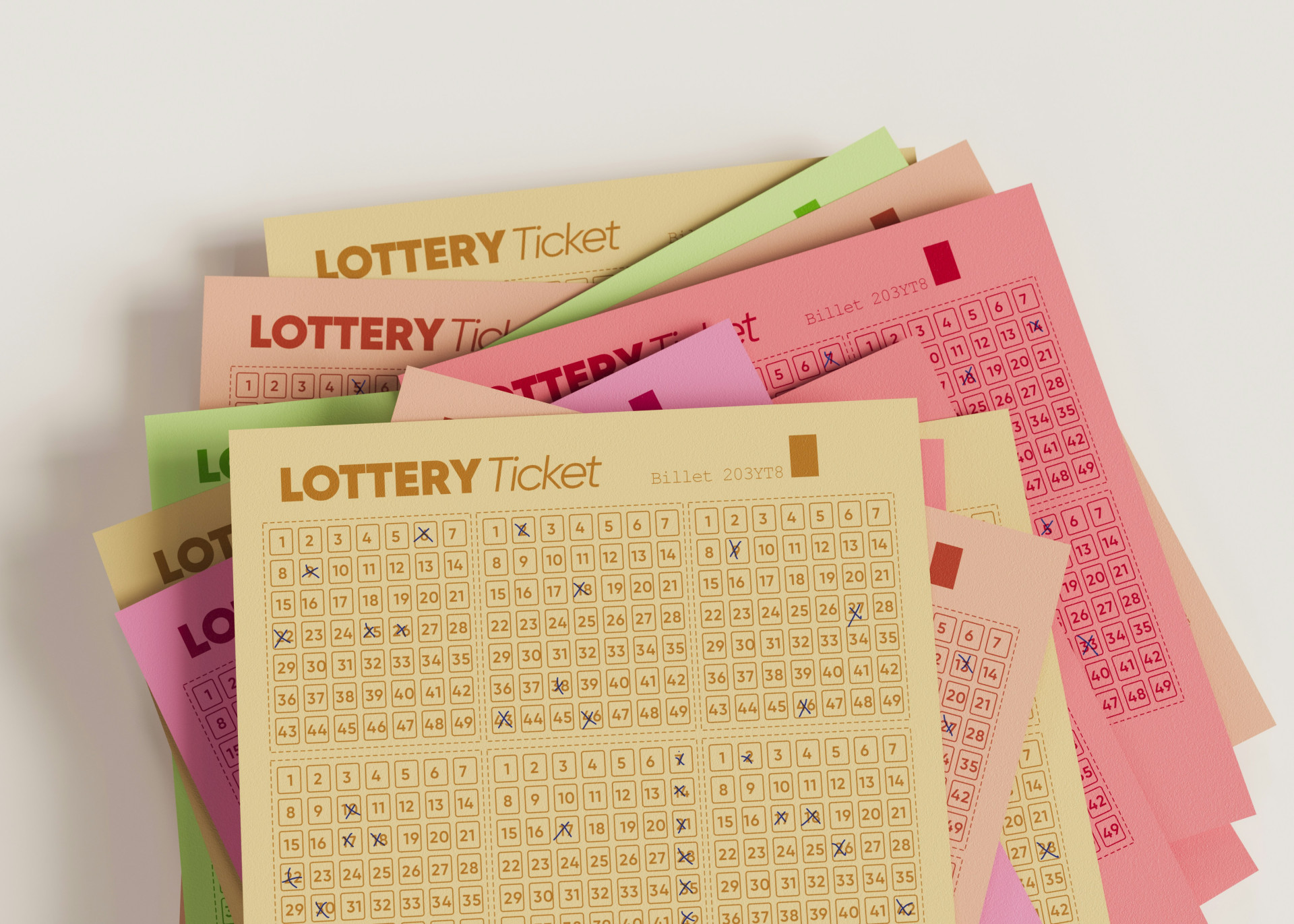
Every week, millions of people across the UK buy a lottery ticket, dreaming of that life-changing jackpot. For most, the dream remains just that – a dream. Yet our fascination with chance, luck, and probability has a long and surprisingly scientific history. From the first European lotteries to the birth of modern statistics and data-driven gaming, the lottery has mirrored both our hopes and our attempts to understand the nature of randomness.
From Royal Charters to National Lotteries
Organised lotteries first appeared in Europe during the 15th and 16th centuries, often used to fund public works such as bridges, fortifications, and churches. In Britain, the first state lottery was authorised by Queen Elizabeth I in 1569, with proceeds going towards the repair of harbours and other public projects. Tickets were expensive, but the idea captured the public imagination: a game of chance that could benefit both the individual and the nation.
Over the centuries, lotteries became a fixture of British life. They were used to raise funds for everything from the British Museum to the early colonies in America. After a long hiatus, the National Lottery was launched in 1994, promising to support “good causes” across the UK – from sports and the arts to heritage and community projects. It quickly became a national institution, blending public benefit with private dreams.
The Birth of Probability
As lotteries and games of chance spread, mathematicians began to ask a fundamental question: how likely is it to win? In the 17th century, thinkers such as Blaise Pascal and Pierre de Fermat laid the foundations of probability theory through their correspondence on gambling problems. Their work was later expanded by Jacob Bernoulli and Pierre-Simon Laplace, who formalised the mathematics of uncertainty.
These breakthroughs transformed not only gaming but science itself. Probability became a tool for understanding the unpredictable – from weather forecasts and medical trials to quantum physics and financial markets. What began as an attempt to make sense of dice and cards evolved into one of the most powerful frameworks in modern science.
The Lottery as a Social Mirror
By the 19th and 20th centuries, lotteries had become deeply embedded in society. They were both a means of raising funds and a reflection of collective hope in uncertain times. In Britain, the National Lottery’s slogan “It could be you” captured the essence of that hope – the tantalising possibility that fortune might strike anyone, anywhere.
But the lottery has also faced criticism. Economists and sociologists have noted that lower-income groups tend to spend a higher proportion of their income on tickets, leading some to call it a “tax on hope.” At the same time, the lottery industry has grown into a multi-billion-pound enterprise, where marketing, psychology, and technology intertwine to sustain participation.
Læs også:


Modern Probability – and the Illusion of Control
Today, anyone with a smartphone can play the lottery, bet on sports, or join online draws. Meanwhile, our mathematical understanding of probability has never been greater. We know exactly how small the odds are – roughly one in 45 million for the UK Lotto jackpot – yet we play anyway.
Behavioural economics helps explain why. Humans are notoriously poor at interpreting probabilities: we overestimate tiny chances and underestimate large risks. That’s why we buy lottery tickets but rarely insure against rare disasters. The lottery taps into this cognitive bias, offering a carefully crafted blend of hope, excitement, and illusion.
From Randomness to Algorithms
As technology advances, the relationship between gaming and mathematics has become ever more intricate. Modern lotteries rely on sophisticated algorithms and random number generators to ensure fairness, while players search for patterns that don’t exist. The same statistical principles that once emerged from games of chance now underpin everything from stock market predictions to artificial intelligence and epidemiology.
In this sense, the lottery is more than a game – it’s a window into how we understand and manage uncertainty in an increasingly complex world.
The Dream That Never Dies
Despite the astronomical odds, millions continue to play. For many, the lottery is not just about money but about imagination – the brief moment when anything seems possible. It’s a small ritual that connects science and emotion, reason and hope.
Perhaps that is why the lottery endures. It speaks to both sides of human nature: the rational thinker who understands the numbers, and the dreamer who buys a ticket anyway.
Læs også: